|
Undoubtedly, one of the conditions I am most passionate about treating is vaginismus. I wish I could scream it out loud: THERE'S HELP AND HOPE with the right treatment! I promise. I have seen so many women who suffer in silence for many years and finally get the help they need. They often share their frustrations of feeling isolated and alone in dealing with this. Often times, they don't attempt to have sexual relationships or end up losing relationships. These women often share that they also don't always participate in activities because they can't use tampons or menstrual cups. What is Vaginismus? Vaginismus is characterized by fear, pain and vaginal spasm in anticipation of gyn exam, tampon or menstrual cup insertion, or vaginal penetration with sexual activity (finger, toys, penis). They typical definition describes vaginal muscles (pelvic floor muscles) that involuntarily or persistently contract when women attempt vaginal penetration. The condition can be caused by physical or psychological factors or a combination. Some describe vaginismus and the reaction of the pelvic floor muscles as a similar response to when an object is brought close to someone's eye and there's a reflexive blink and protection/closure. Primary vaginismus usually refers to the experience of vaginismus with first-time intercourse or other vaginal penetrative attempts. Secondary vaginismus usually refers to the experience of developing vaginismus a little later in life, after a period of pain-free intercourse, gyn exams or tampon insertion. This can relate to changes after giving birth, medical conditions that may have even resolved, trauma or abuse, surgery, or having painful penetration (dyspareunia) for years that has now transitioned to a full vaginismus response. How prevalent is it? Reports vary widely because many women don't share they have this treatable condition and suffer in silence. It ranges from 1 in 1,000 to 16 in 100 women. What types of treatments are available? The most important first step is to find a healthcare provider (GYN specialist, UroGynecologist, or a Pelvic PT) who regularly sees patients with pelvic pain conditions and vaginismus. Believe it or not, many OB/GYNs do not get specialized training in this area. In some cases, women still have hymenal tissue that is completely or partially blocking the entrance to the vagina. I have had many patient cases over the years where the issue was not about the vaginal pelvic floor muscles or pyschological, but a true block from hymenal tissue (sometimes hidden and farther back than the entrance). The treatment may include a very minor procedure (hymenectomy) to cut some of that tissue away. There are also other medical conditions or hormonal deficiencies that should be considered as well. Once other medical conditions are ruled out, the ideal treatment for vaginismus is specialized pelvic physical therapy. That's what we do! This is done in a private room and only one on one with someone who completely understands how to address this condition. In some cases, it may benefit you to also see a counselor who understands how to address pain and anxiety, as this combination of treatment works very well. During pelvic physical therapy sessions, we assess you as a whole person, not simply as having vaginismus. We want to know about your experience and journey with this first. There's no rush with examinations. We make a plan based on your current status and what your individual goals are. Your primary goal may only be to have a GYN exam for the first time, while other women who have been married for years may want to have penetrative sexual activity for the first time. We provide treatments in the clinic (sometimes only 2-6 visits are needed) and also create a home program for you to do that may include vaginal dilators. Some women try vaginal dilators at home on their own, which may be enough. We often find that combining the full range of therapies and home management recommendations is usually much more effective. In some cases, you may also benefit from medications or topical creams provided by a physician as well. We will be happy to share any other information you'd like about what to expect during treatments. Is it ever too late to seek treatment? No. Though this may start early in life, we see women in their 40s-60s who finally decided to get help for this. It's never too late. We encourage you to reach out early if you can (even in your teens). If any health provider tells you "it's just in your head" or " just relax more" or "drink wine," look for a new one. We hear this all too often and it is not helpful advice. What if I've tried treatment and it hasn't worked in the past? There's not an exact standard of care for the treatment of vaginismus. Over the years, I've heard patients share all sorts of stories about treatments and "potions" they received. Many of our patients have seen 10-15 healthcare providers before finding us. The most important piece of advice is DON'T GIVE UP. There's hope and there are people who can help you. (Refer to the directory below for healthcare providers in your area). Here's an article I wrote that explains ways that physical therapy and dilators can help. Physical Therapy and Dilators. What's the Connection? ~ Tracy Sher Some more information and resources for you: Vaginal Dilator Guide for Patients. Pain, Fear, and Anxiety Vaginismus Website - How Many Women Have Vaginismus? Listing of Pelvic Health Professionals All Over the World. Ultimate Directory. 8/21/2016 Do Women with Postpartum Pelvic Girdle Pain Activate Muscles Differently Than Women Without Pain? According to the 2016 study (and previous studies) on postnatal pelvic girdle pain, Response of the muscles in the pelvic floor and the lower lateral abdominal wall during the Active Straight Leg Raise in women with and without pelvic girdle pain: An experimental study , women with pain activate muscles differently. There's help for this! The important findings are: During the subsequent ipsilateral leg lift (lifting the leg on the same side as the painful pelvic region): * pre-activation in the pelvic floor muscles was observed in 36% of women with pelvic girdle pain and in 91% of pain-free women *Compared to pain-free women, women with pelvic girdle pain also showed significantly later onset time in both the pelvic floor muscles and the muscles of the lower lateral abdominal wall We know from previous studies (one of many) that there are many prognostic factors that can relate to persistent pelvic girdle pain such as age, muscle function, disability, and previous fitness level/pain levels . What does this all mean for patients ? How can we help those of you who are dealing with lumbar and pelvic pain , even years after having a baby? The key is to address each patient individually. There are numerous layers to the pain experience - beyond just the location of pain. It is likely also simplistic and erroneous to assume that the pelvis is "too unstable" or that the sacroiliac joint is just hypermobile (there are certainly cases of people who have hypermobility as a component such as with Ehler's Danlos Syndrome, but even then, there are other factors). If you find that you have been seeing other healthcare professionals for years telling you that your leg, sacroiliac joint, or pelvis keeps going "out," that's likely not the issue. From a whole-person perspective, there are factors to consider such as hormonal, physical, sleep/lifestyle, social, and psychological (not "it's-in-your-head type, but rather effects of anxiety, stress, previous pain, or previous trauma, etc) . Therefore, addressing these factors AND taking a closer look at the pre-activation/motor control of the muscles and general movement patterns is an ideal approach. If you are a patient dealing with pelvic girdle pain, sacroiliac joint pain, lower back pain after having a baby (even years later), there's a lot of hope for getting better! A pelvic physical therapist can assess you individually to facilitate the best plan for your daily life and also provide an optimal exercise plan to guide you to relatively pain-free movements! This goes beyond simply giving a list of exercises and saying good luck! That's why so many women continue to have pain for years later. We can also work closely with your pregnancy /postpartum specialists - there are some incredible ones out there too. For professionals - The key is how do we improve/facilitate the proposed disturbed motor activation patterns that influence women's ability to stabilize the pelvis during leg? How much do we train "pre-activation?" There seem to be distinct professional views: 1. Some say just get patients moving in pain-free ways and this will help with improving neural/motor activation and don't focus on pre-activation and minutia; or 2. Others focus heavily on individual "pre-activation," movement patterns, segmental/"core" strengthening. Couldn't it be the case that we include both of these strategies (and individualize as needed) - not so much thinking we are increasing strength, but rather improving motor patterns and activation on a neural level? Another consideration: EMG testing can be subpar for understanding the underlying issue regarding muscle activation. In other words, patients may not be pre-activating pelvic floor as a result of shortening of the muscles rather than simply not activating due to weakness or other. Therefore, just working on activating the pelvic floor prior to an activity, may not be the best treatment. We still have to look at each individual and assess all of the variables. ** Did you know that Tracy Sher, MPT, CSCS and Alma Bautista, SPT, at Sher Pelvic Health are both Certified MuTu Pros™ in postnatal fitness? Minal Saraf, MSPT also specializes in Pelvic PT for pregnancy/postnatal. 6/8/2016 Safe Postnatal Exercise Programs


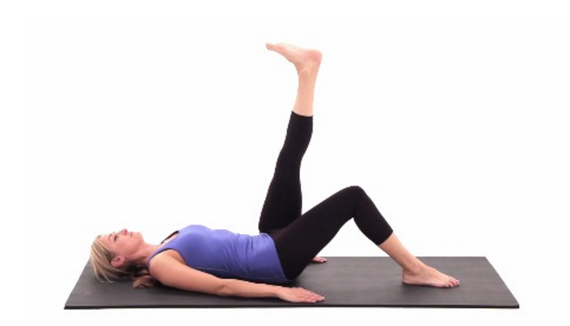
We receive many questions about postnatal exercise concerns and online programs. We hope you find this information helpful!
When Can I Return to Exercise After Having a Baby?
The American College of Obstetricians and Gynecologists has general guidelines on this topic.
In addition to those general guidelines, it is important to remember that having a baby via C-section or vaginal delivery is a big deal! Your body is incredible, strong and beautiful. Honor your body during this time and allow the tissues to heal ( vaginal delivery as an extreme sport and returning to exercise after a C-section). Movement is very beneficial to healing such as walking, breathing exercises and pelvic floor exercises. Generally, after 4-8 weeks (based on your medical visits), you can increase to higher intensity aerobic exercise and weights. If you try to go back to the same exact exercises that you were doing during pregnancy or before, you may realize you have changes affecting the way you move and feel such as: scar tissue adhesions at your abdomen, a prolapse starting, separation of the abdominal muscles, leaking with jumping. What if I Have Pelvic Organ Prolapse, Urinary Leakage or Diastasis Recti (abdominal separation causing a "pooch")?
Once you are cleared by your OB medically, we highly recommend you see a Pelvic Physical Therapist (Women's Health Physical Therapist). This is exactly what we do! We help you maximize your pelvic, abdominal, and back health to be able to return fully to your daily activities, including exercise programs. We can do postnatal screenings to identify these conditions and provide individualized treatment and home programs for you.
What are Good Online Postnatal Exercise Programs (either before or after Pelvic PT)
There are numerous postnatal exercise programs out there, which is why we want to highlight the very best! The programs listed here are ones that specifically take pelvic health into consideration. They are developed by fitness trainers or PTs we trust.
** These exercise programs are not just for up to 1 year postnatal. They are safe for most people at any age because they are meant to facilitate proper form and optimal pelvic/core health. ** Concern: Classes that focus on the BOOT CAMP mentality . Some of the exercises can be okay, but often women are pushed to do crunches, planks, high-intensity jogging and jumping with the motto "get your body back into shape quickly." These exercises are typically not appropriate for many women in the first year after baby. Many women go to countless exercise classes for their abdominals only to learn that it was making the diastasis recti and pelvic floor issues worse. ** We receive questions about the Tupler Technique often. It involves using a splint for a certain period of time while doing specific exercises. It can work for some, but we find that it is not applicable to daily function and many women have difficulty adhering to the program. We didn't feel comfortable putting it on our "best" list. * We will continue to modify and add to this list. MUTU SYSTEM
"Had enough of the baby belly? Strengthen your core, improve pelvic floor function + get strong, fit + body confident… however long ago you had your baby!"
Click on the Banner Below to Learn More!
We recommend this to new moms in conjunction with our pelvic PT sessions OR this program can serve as a stepping stone to more advanced exercise programs (getting back to high-intensity weight lifting classes and/or aerobic exercises) . Tracy Sher serves as Medical Advisor for MuTu and affiliate and fully endorses the program. The online program also includes access to a very active online support group. The founder, Wendy Powell, is very passionate about this system and heavily involved in online support.
* We will soon offer LIVE MuTu classes in Orlando starting in July/August of 2016!
FIT2B
"Wholesome fitness for the whole family. You crave modesty, affordability, and accountability."
Another program that is always rated with high satisfaction is Fit2B , by Beth Learn. The primary feature is a monthly or yearly membership that provides online options such as: access to over 100 workouts, a supportive Facebook community, discounts on eCourses , and a Fit2B mobile app.
HAB-IT
"Hab-it: Pelvic Floor is a DVD [now digitial download] that gives women suffering from the symptoms of a weakened pelvic floor (urinary incontinence, pelvic prolapse) the experience of working with a physical therapist from the comforts of home. The intent of the DVD is to help, if not eliminate, the symptoms of a weakened pelvic floor...designed with input from physicians, physical therapists, and real patients to ensure that viewers receive expert guidance that addresses the most common mistakes and frustrations of physical therapy"
The website features a series of digital download exercise programs: Hab-It Pelvic Floor Exercises, 7 Day Advanced Stabilization Program, Interval Cardio Workout, Interval Plyometric Workout.
We heard a lot about this from patients. They enjoyed the program, but were looking for more individualized programs as well. THE PELVIC FLOOR PISTON - FOUNDATION FOR FITNESS DIGITAL DOWNLOAD
"The pelvic floor has long been the only muscle targeted in the battle against incontinence, and yet ignored in our pursuit of a strong ‘core’. New research has helped us understand that the pelvic floor is actually a critical part of the ‘core’ team and collectively that team works together to keep your center anchored and dry. Integrated teamwork, linked to the up and down pistoning action of our breath, provides a sturdy foundation that supports our joints and movement, accelerates fitness, and keeps us dry. Also recommended for minimal to moderate prolapse, diastasis, and pelvic pain."
Physical Therapist Julie Wiebe is a leading clinician and educator on the topics of returning to high-level athletics after changes at the pelvic floor and core. Foundation for Fitness is your first step toward resolving leaks and restoring a strong foundation for your movement and fitness. * This is an educational online course rather than an exercise system. Highly recommended to understand the pressure system of the core. You can view this as a great complement to the full programs listed above.
We hope this has been helpful!
If you would like to set up a consultation with one of our Pelvic PTs , you can fill out the registration form on our welcome page HERE or call 407-900-2876 ~ Tracy Sher and the Sher Pelvic Health team! Most people think of physical therapy in terms of therapeutic treatment for orthopedic or neurological conditions – things such as back pain, knee pain, and strokes. Did you know, though, that there are pelvic health specialty-trained physical therapists who help women and men with very private conditions? The terms often used are: pelvic health physical therapists, women’s health physical therapists, or pelvic PTs. So, how are vaginal dilators utilized for pelvic physical therapy? Vaginal dilators are most effective when used for conditions that prevent the patient from having a desired body part (finger or penis) or object (tampon, speculum for GYN exam, vibrator, etc.) pass the vaginal opening and into the vaginal canal. Some examples of these types of conditions are:
It is important to note that most of the conditions listed need a team approach to treatment, including the medical management component first. For example, if someone has a dermatologic condition, prior to or during the pelvic PT treatment timeframe and use of dilators, they may need a topical ointment applied to the vulvar tissue. Essentially, the use of dilators does not replace optimal medical and physical therapy management. Rather, it is an excellent adjunct to the appropriate treatment plan. As a pelvic PT since 2000, I can attest that many patients over the years arrived for their evaluations with bags of various dilators and frustrated looks. A typical comment is “My doctor told me to get these, but didn’t provide any additional instruction” or “I ordered these online” followed by “but, I have no clue if I am using them the right way and I’m not even sure they are right for me.” Most of the time, the patients have the wrong sizes and/or the wrong product for their condition all-together. I’ve even heard physicians and pelvic PTs say, “I just don’t use them with patients because they aren’t really that effective.” I wholeheartedly disagree and have been on a mission to show the wonders of the dilator! When the appropriate dilators are selected and the patient is instructed properly on how to use them, there’s excellent potential for a successful outcome. It can make a significant difference to have a skilled pelvic physical therapy help guide you with dilators! When selecting dilators:
In an ideal world, pelvic PTs should help the patient initially with a demo on how to properly use the dilators. This includes the best way to insert the dilators (many people are unaware of this aspect), lubricants to use, how to properly progress the dilators, and tips on how to facilitate the desired outcome and transition to the ultimate goal. This is where pelvic PT has a large role in a successful outcome for a patient. In most educational manuals I’ve seen, the primary focus of dilators is just to stretch the vaginal canal and muscles enough over time to get a desired outcome. That’s just a part of what is happening and if only that aspect is addressed, it may be why some patients do not progress well. The way I instruct dilators has to do with 3 primary factors.
Once the patient feels comfortable with the education and demonstrations, I often recommend dilators as part of a home program. It is a highly effective way for patients to feel proactive in their medical care versus waiting for a medical practitioner to do something to or for them. Moreover, it is a way to facilitate improvements consistently because patients can use them regularly and at times that work for their schedules. * This post was initially written for the Soul Source dilator company. Tracy Sher, MPT, CSCS is a pelvic health and manual orthopedic physical therapist, consultant, international speaker and educator, and founder of the social media brand and blog, Pelvic Guru. She is the owner and director of small, boutique private practice in Orlando, Sher Pelvic Health and Healing, LLC. She treats men and women with pelvic health issues, with a focus on persistent pelvic pain, pregnancy/postpartum conditions, pelvic-abdominal conditions, orthopedic hip and pelvis pain, and genital cancers using an integrated care model. Tracy is co-creator of a Pudendal Neuralgia and Pelvic Pain Differential CEU course (with a focus on the brain and pain) and teaches this internationally. She developed a new Pelvic PT Boot Camp clinical skills course as well. Previously, she taught pelvic floor CEU courses for Herman and Wallace Pelvic Rehab Institute and assisted for Section on Women's Health courses. She is a certified pelvic physical therapist, strength and conditioning specialist and currently completing a sexual counseling certification. Prior to owning her own outpatient practice in 2013, since 2000, Tracy has successfully started or helped expand 3 large hospital-based women's health/pelvic physical therapy programs that are still flourishing today. She is an Emory University graduate and completed her graduate PT studies at Northwestern University |
Author
|


RSS Feed